An HS Code Typo in a Spreadsheet Can Trigger a Five-Year Customs Audit

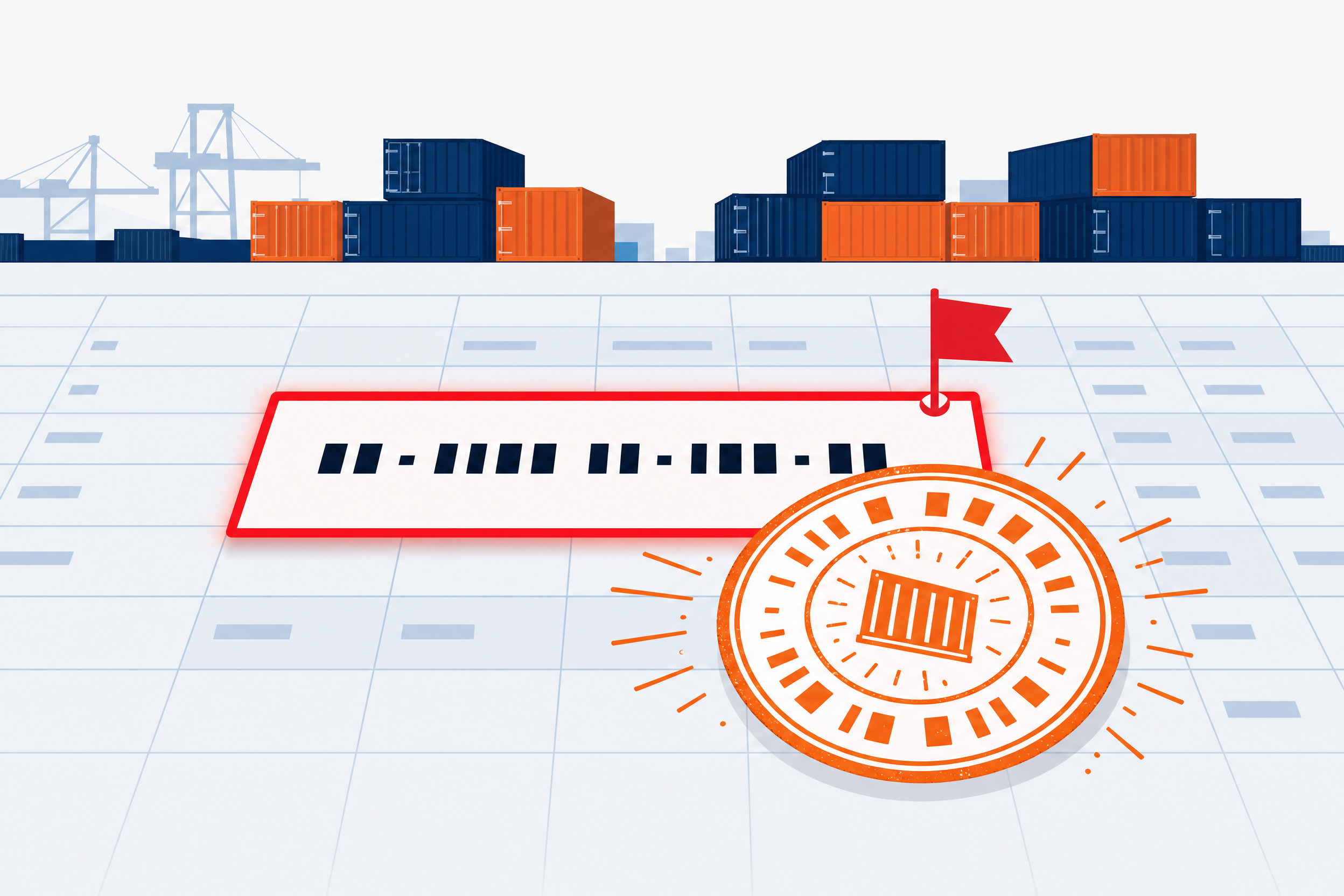
Quick answer: The costliest cell in a trade pricing spreadsheet usually isn't the freight rate or the FX conversion — it's the HS code, typed in manually and rarely double-checked. A single wrong classification doesn't just misprice one shipment; it can flag a company for a customs audit that reaches back five years across every entry that used the same code, and 2026 enforcement changes have made that exposure bigger, not smaller.
The pricing error that doesn't stay contained to one quote
Most conversations about spreadsheet risk in international trade focus on the numbers that change fast — currency rates, freight surcharges, tariff percentages. Those matter. But there's a quieter, more expensive failure mode: the HS (Harmonized System) code sitting in a dropdown or free-text cell that someone entered once, years ago, and every subsequent quote just copies forward.
Unlike a stale exchange rate, a wrong HS code isn't a one-time miss. It's structural. Every quote, invoice, and customs entry that inherits that code inherits the error with it — and customs authorities don't just look at the shipment in front of them when they catch a misclassification.
Why enforcement got sharper in 2026
A June 2026 executive order on customs enforcement directed U.S. Customs and Border Protection to overhaul importer eligibility standards, enforce a minimum 50% penalty floor on qualifying violations, and expand data-analytics-driven audit targeting across importers of every size — not just large enterprises. Classification is now the highest-volume audit trigger of the year, and misclassification errors account for roughly 42% of all CBP penalty assessments. Recent audit activity backs up the shift: CBP audits recovered $134 million in duties in a single four-month stretch, a 67% jump in audit activity year over year.
Why one wrong code becomes a five-year problem
CBP, like most customs authorities, has the authority to audit import history going back five years and assess back-duties across every affected entry once a misclassification surfaces. That means a code entered incorrectly in a spreadsheet years ago and reused on every quote since can generate liability across dozens or hundreds of shipments the moment an auditor — or a routine compliance review — catches it.
The financial exposure scales with three factors: the duty-rate gap between the wrong code and the correct one, the value and volume of shipments that used it, and whether the incorrect code also triggered exposure to Section 301 tariffs, antidumping orders, or other trade remedies that wouldn't have applied under the right classification. Recent classification-audit data puts the average penalty per audit at roughly $670,000 once back-duties and fines are combined across a multi-year window. For deliberate misclassification, civil penalties under 19 USC 1592 can reach the full value of the merchandise; even unintentional errors carry back-duty exposure across every entry the auditor pulls.
Why spreadsheets make this error almost inevitable
A spreadsheet has no mechanism to flag that an HS code might be wrong. It will happily carry an old classification into a new quote, format it identically to every correct cell around it, and give no visual signal that anything is off. The formula linking a product to its duty rate is only as good as the code someone typed in — and once it's in the template, it gets copy-pasted forward indefinitely.
There's also a compounding-products problem. A single company might sell dozens of SKUs across multiple destination countries, each requiring its own HS code and duty logic. A spreadsheet built to handle five product lines gets stretched to handle fifty, and nobody goes back to re-verify the original classifications as the business scales — they just add rows.
What actually reduces this exposure
Reducing HS code risk isn't about hiring someone to re-check every cell manually — that doesn't scale and doesn't fully solve the problem, since manual review is exactly what produced the error in the first place. What actually helps:
- Classification tied to product attributes, not memory. The code should be derived from the product's actual characteristics — material, function, composition — every time, not copied from "what we used last time."
- A visible source and date for every classification. If a duty rate or code can't be traced to when and how it was determined, it can't be trusted at audit time.
- Alerts when a product's classification hasn't been reviewed in a while. Trade rules change; a classification that was correct two years ago may not be correct today given HS code updates and reclassification rulings.
- Consistency across every quote using the same product. If two quotes for the same SKU show different HS codes, that's a signal something in the process broke — a spreadsheet has no way to catch that automatically.
FAQ
Can a single wrong HS code really affect past shipments, not just future ones?
Yes. Customs audit authority typically extends back five years, and once a misclassification is identified, auditors can review every entry that used the same code — not just the shipment that triggered the review.
Is this only a risk for large importers?
No. 2026 enforcement changes explicitly expanded data-driven audit targeting to importers of all sizes, and smaller companies are often more exposed since they're less likely to have a dedicated classification specialist reviewing codes before they're reused across quotes.
How is this different from general "spreadsheet risk" in trade pricing?
Currency and freight errors typically affect one quote at a time and get corrected on the next update. An HS code error is inherited by every future quote using the same product until someone actively catches and fixes it — making it a compounding liability rather than an isolated mistake.
What's the fastest way to check current exposure?
Pull every unique HS code currently in use across active quotes and cross-check each one against the product's actual attributes and the current tariff schedule, rather than assuming a code that's "always been used" is still correct.
Getting classification right on every quote — not just checked once and copied forward — is part of treating landed cost as a live calculation instead of a static spreadsheet. That's the problem Quotahack is built to solve.


Start where it feels easiest
Whether you want a guide, a tool, or direct help, there’s a simple way to begin.
Reassurance: Built for everyday operators who want practical AI help now.