Verbal Quotes Are Costing Tradespeople the Job — Here's What Wins Instead

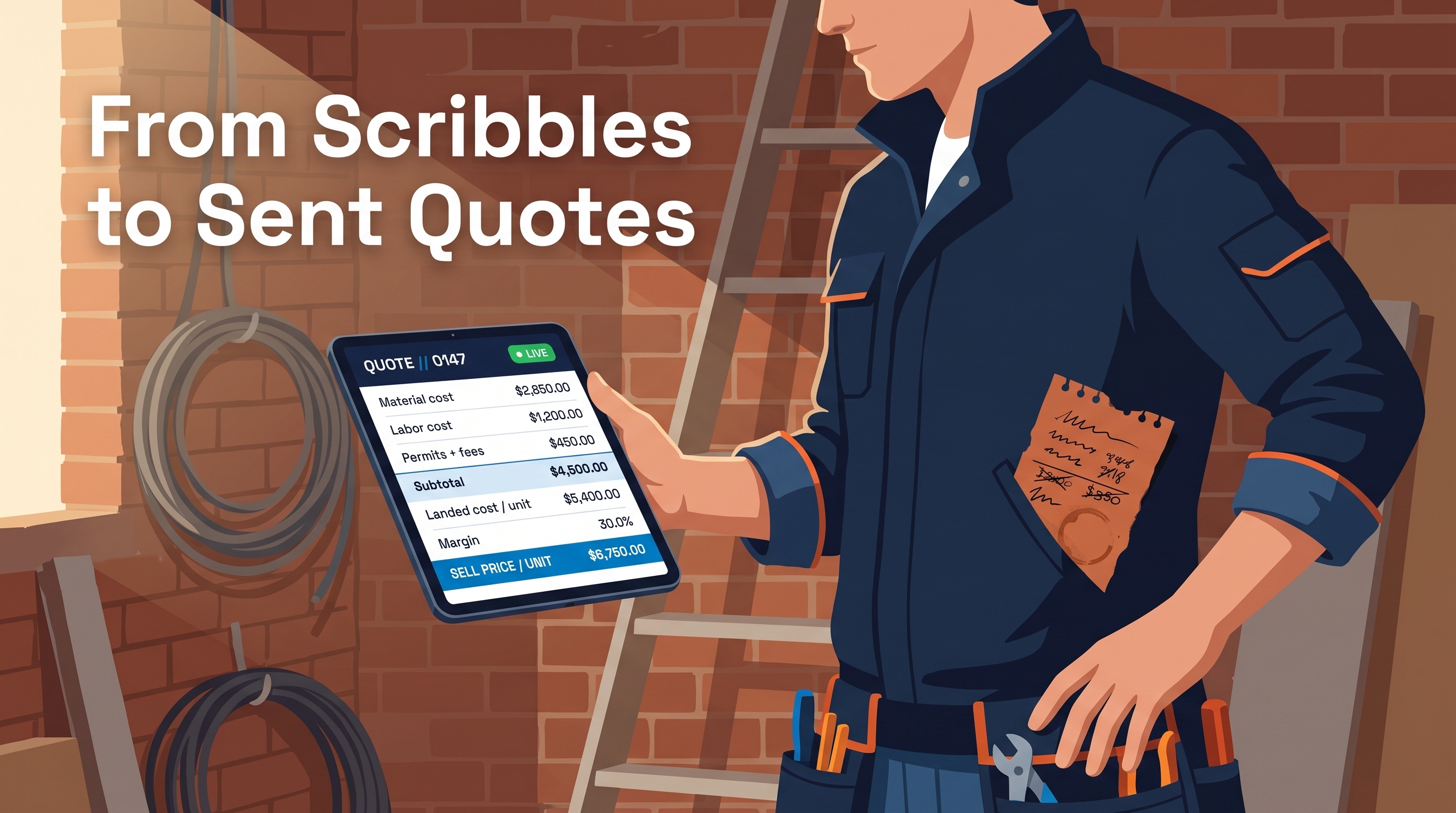
Quick answer: Tradespeople who send a detailed, written, itemized estimate close jobs at nearly double the rate of those who give a verbal or lump-sum number, according to industry survey data — and contractors who send that estimate within an hour of the site visit close at nearly double the rate of those who wait a day or more. Price isn't the only thing being judged; the form the quote takes is doing real work too.
A verbal number and a written quote aren't competing on the same terms
Plenty of tradespeople treat the quote itself as a formality — the real work is the estimate in their head, and the customer just needs a number. But customers comparing bids aren't only comparing prices. They're comparing how much they trust the number, and a scribbled figure or a text message with a dollar amount carries a lot less weight than a written breakdown of exactly what's included.
That difference shows up directly in close rates. Contractors who provide detailed written estimates close at nearly double the rate of those who give verbal or lump-sum bids. Separate survey data puts the gap at up to 30% more jobs won for written quotes versus verbal ones. Whatever the exact number in a given trade or region, the direction is consistent: the format of the quote is itself a competitive factor, independent of the price inside it.
Why a written, itemized quote wins trust a verbal number can't
A verbal quote asks the customer to trust that the number reflects a complete picture of the job — and to remember it accurately when comparing against other bids days later. A written, itemized quote removes both of those asks:
- It's comparable. A customer holding three written quotes can line up labor, materials, and line items side by side. A customer holding one written quote and two verbal numbers can't do that with the verbal ones at all.
- It signals professionalism. A clean, itemized document reads as "this business has a system." A number given over the phone, however accurate, doesn't carry the same weight — fairly or not.
- It reduces disputes later. When the scope is written down — permit costs, disposal fees, what's included and what isn't — there's no gap for "I thought that was included" to open up after the work starts.
- It's easy to forward. Homeowners often loop in a spouse, a property manager, or a second opinion before committing. A written quote travels by text or email in seconds; a verbal number has to be relayed secondhand, and something usually gets lost or misremembered.
Speed still matters — but it doesn't cancel out format
Response speed and quote format aren't competing priorities — they compound. Contractors who send an estimate within an hour of the site visit close at nearly double the rate of those who wait more than a day, independent of whether the quote is written or verbal. Combine a same-day response with a written, itemized breakdown, and the two advantages stack: fast and professional beats fast-but-vague or professional-but-slow.
This is exactly the trap a lot of tradespeople fall into without realizing it. A quick verbal number on-site feels like the fast option. But if the customer is also collecting a written quote from a competitor a day later, "fast and vague" can still lose to "a day slower but clearly itemized" — because the written quote is doing persuasive work the verbal one never gets the chance to do.
Why tradespeople default to verbal anyway
Nobody skips the written quote because they don't understand its value. They skip it because building one takes time they don't have standing in a driveway or halfway through the next job. Writing an itemized quote properly — labor, materials, permit and disposal line items, a clear scope, a validity window — takes real focus, and "I'll type it up tonight" is where a same-day advantage quietly turns into a two-day one.
That's the actual tradeoff most trade businesses are navigating, whether they'd describe it this way or not: verbal is fast but weak, written is strong but slow — and the tools built to solve this (generic invoicing apps, desktop templates) were mostly designed for someone sitting at an office desk, not someone who just finished a walkthrough and has fifteen minutes before the next appointment.
What closing that gap actually requires
- A structure that doesn't have to be rebuilt from scratch each time. Every quote should default to the same itemized shape — labor, materials, fees, scope — so building one is filling in specifics, not starting from a blank page.
- Something that works standing up, on a phone. If turning notes into a written quote requires sitting down at a laptop, the same-day window is already at risk before the quote is finished.
- Pricing that's already current. An itemized quote is only as trustworthy as the numbers inside it — stale material costs undercut the professionalism a written format is supposed to project.
- A document, not just a number. Whatever format it takes, it needs to be something the customer can forward, save, and compare — not something they have to remember correctly from a conversation.
This is the specific gap Quotahack is building its AI-first quoting app to close: turning a rough on-site assessment into a clean, itemized, professional quote in the time it currently takes to give someone a verbal ballpark — built for tradespeople working from a truck, not a desk.
FAQ
Is a verbal quote ever good enough?
For very small, low-stakes jobs it can work. For anything where the customer is comparing multiple bids or the scope has more than one or two line items, a written quote consistently outperforms a verbal one on close rate.
Does a written quote need to be complicated to work?
No — the advantage comes from clarity and completeness, not length. A short itemized breakdown (labor, materials, key fees, scope, validity window) outperforms both a vague verbal number and an overly long document nobody reads in full.
If speed matters most, why not just stick with fast verbal quotes?
Because speed and format aren't substitutes for each other — they're both scored separately by the customer. The tradespeople winning the most jobs are fast and written, not one or the other.
Is Quotahack's quoting app available yet?
It's in development. This post is part of ongoing coverage as the product takes shape — check back on the Quotahack blog for updates.
Quotahack is building an AI-first quoting app for tradespeople who need a written, professional quote out the door as fast as a verbal one — from the field, not the office.


Start where it feels easiest
Whether you want a guide, a tool, or direct help, there’s a simple way to begin.
Reassurance: Built for everyday operators who want practical AI help now.